“Thus organisms and environments are both causes and effects

in a coevolutionary process.”

—Richard C. Lewontin in The Triple Helix: Gene, Organism, and Environment.

Friday, July 3, 2020

New publication in Marine Ecology Progress Series

I just published a new article in Marine Ecology Progress Series with coauthors Eric Palkovacs and Kristy Kroeker!

Predator populations differ in their foraging responses to acute seawater acidification


Do all marine predator populations respond similarly to acute seawater acidification? We tested how Nucella dogwhelks from three different populations altered the consumption of mussels under ambient and acidified conditions. Our results demonstrate that exposure to acidification does not universally impair predators and responses may be related to prior pH exposure, leading to divergent ecological effects among different populations.


Huge thanks to Sandra, Cory, Nicole, and all others who helped those many early mornings and late nights in all weather conditions checking on snails every 12 hours for 60 days!


Wednesday, March 25, 2020

New job!

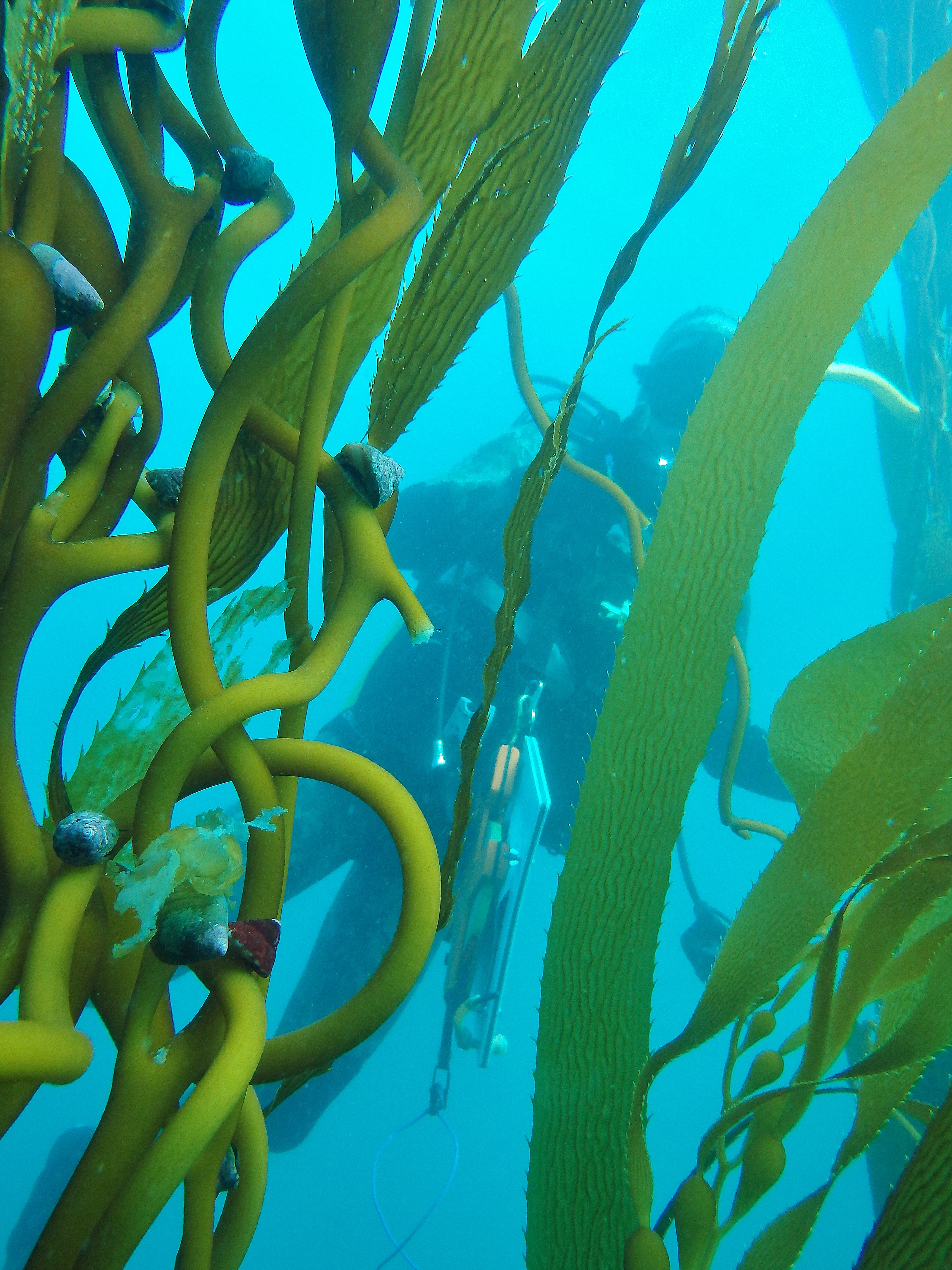
I am extremely excited to announce I accepted a position with California Sea Grant as a Kelp Management Extension Fellow! The position is located in Eureka, CA.


Humboldt Bay, California. Photo credit: Robert Campbell
It took 25 mins to align these photos; Blogger sucks don't use it.

I'll be using my marine biology training to help assess the state of kelp forests in California (they are not looking good: see this CDFW article) and create a plan for their recovery. This statewide fellowship is modeled after the successful Knauss Marine Policy Fellowship Program that brings early career marine scientists to Washington D.C. to experience the creation of federal marine policy. My fellowship is essentially a Knauss fellowship for kelp forests in California. I'm very excited to learn both the ins and outs of natural resource management and the diverse needs of all the people that use and need the kelp forests (called stakeholders). The two-year fellowship will round out my ecology education with policy experience so I can join the ranks of scientists and politicians who make sure our rich, culturally and economically important marine resources continue to thrive. More info about the position here: https://caseagrant.ucsd.edu/fellowships/california-department-of-fish-and-wildlife-california-sea-grant-statewide-kelp

Tegula grazing kelp
Tegula snails grazing in kelp forest. Photo credit: Lynne Wetmore

More Tegula snails grazing on kelp. Photo credit: Norbert Wu Productions. 


Okay, so maybe I just want to save all the cute baby snails that live in the kelp. Is that so bad?! ;) __@_v


Plugging myself into the Marvel universe (as that's what I've been doing most evenings now during the COVID-19 shelter-in-place mandate): by learning how policy and management work, I can become more than the soft-spoken scientist who knows about only the natural world and then becomes a pawn for political powers! 

Toby Jones and Hugo Weaving in Captain America: The First Avenger (2011)

 Dr. Zola: "I am certain of nothing. I fear it may not work at all." 
Gen. Johann Schmidt: [pushes Zola out of the way] "I have not come all this way for safety, doctor!"

I've only watched four movies so far, but I'm wondering if they made a movie yet where the PhD is the superhero. It seems useful to spread the message that education, rather than magic (Capt. America, Capt. Marvel) or money (Iron Man), is power. 


Tuesday, February 25, 2020

Teaching Intro to Field Research is Amazing

Last weekend for my Introduction to Field Research course, we visited Año Nuevo State Park (also a University of California natural reserve), saw male, female, and baby elephant seals, spoke with reserve manager Dr. Patrick Robinson about the incredible physiology and life history of these animals, and saw some tagging and oceanographic equipment the seals get to wear.

 
Remaining adult elephant seals after most of the breeding season is over. The males here are not dominant males; those have already taken off to sea. Nevertheless, we saw them snorting and charging each other, and even mate with a female!

Here is Dr. Robinson showing the students the data loggers that are glued to the seals' skin and to collect information about depth, temperature, conductivity (used to calculate salinity), and light. The seals naturally shed their skin on land every year, so the tags just fall right off!


Then we visited the rocky intertidal at Davenport Landing, where I truly came to understand how I have realized my childhood dream of understanding (to some level) all the creatures that live in the intertidal zone.


Obligatory neon green anemone photo. Neonness courtesy the zooxanthellae. The students totally noticed that some anemones were more neon, so I got to explain the symbiosis! Photo credit Emmet P. 


You're really between a rock and a hard place when you find yourself between being eaten by a sea star and an anemone... until you realize you're the only one with an exoskeleton here. Then I guess you're just between an echinoderm and a cnidarian.


We only found one singular nudibranch who was all tucked up and not very happy looking, but the students loved the trip nevertheless. Then I took them all to Whale City bakery, where I always went after fieldwork at Davenport, and we enjoyed hot drinks and snacks to warm ourselves from the frigid wind.

Finding the shiny slugs is always my primary goal. This one was less shiny but just as sluggy.

I feel so lucky that I get paid to do such fun and rewarding things!!


Tuesday, February 11, 2020

Job aps are in

This quarter at UC Santa Cruz, I am having a blast teaching Introduction to Field Research as well as Ecology of Reefs, Mangroves, and Seagrasses.


Students making natural history observations during the Intro to Field Research and Conservation class' field trip last weekend to Fort Ord Natural Reserve in Marina, CA

Unfortunately, the term ends in April, and then I'll be on to new things! It has been very exciting applying for marine biology jobs all over the Pacific Northwest. I see myself as an educator, researcher, and natural resource manager, and so far this year I have applied to four jobs in these categories, including:

  • California Sea Grant-California Department of Fish and Wildlife Marine Debris Program Extension Fellow (Oakland, CA)
  • California Sea Grant-California Department of Fish and Wildlife Kelp Management Extension Fellow (Eureka, CA)
  • Cabrillo College Biology Instructor (Aptos, CA)
  • Olympia Oyster and Bull Kelp Habitat Restoration Project Manager at Puget Sound Restoration Fund (Seattle, WA)
All these are full-time positions doing things I love in places I love (with the exception of one place that will remain unnamed in case employers are checking out this blog; hehe). 

I look forward to giving updates on the statuses of all these soon!

* Update 3.09.2020: I have interviewed for both Sea Grant positions and have an interview with Puget Sound Restoration Fund later this week. I was not offered an interview at Cabrillo College. 


Tuesday, January 21, 2020

New year accomplishments

I am very, very excited to announce that I have completed my degree and I am now Dr. Gina Contolini!

Me with my family the night I passed my closed defense.

Me starting my public defense.


On that note, my first dissertation chapter was published as a stand-alone research article in the journal Oecologia. Seeing this publication come out was a great way to graduate on a high note. Check it out online using the link below, and if you want full access, feel free to contact me.

https://link.springer.com/article/10.1007%2Fs00442-019-04591-x


Now, I'm teaching a couple courses here at UCSC while applying for postdocs and faculty jobs in the area. It is nice to be able to transition to another phase of life!


Tuesday, November 19, 2019

Major career milestones

This quarter has been full of accomplishments that have been a long time coming for me.

First, I got my first article published in a peer-reviewed journal. "Climate shapes population variation in dogwhelk predation on foundational mussels" will appear in Oecologia sometime in the next couple months. Huge thanks to coauthors Eric Palkovacs (my advisor) and Kerry Reid (former postdoc in the lab).

Secondly, I compiled an entire draft of my PhD dissertation! After many stressful weeks of finishing analyses while applying for jobs, I finally submitted my whole dissertation to my committee, and I'm very happy to report that those who have read it so far are pleased with it. I cannot understate the amount of weight that has been lifted from my shoulders. I feel at least 100 times lighter and I can do things like watch movies, play frisbee, and make snail puns again. Here is my title page as well as some new puns on old puns.

Thirdly, I got a part-time job doing environmental consulting with a company called Surf 2 Sea. I am analyzing mussel bed communities before and after a construction project at the marine lab here. For this work, I'm doing the exact same thing I've been doing in graduate school the last year, so it is a perfect transitional job. It's great to get back in the field again after being stuck writing for the last few months!


Otter-star project photos

In May, I got to help out graduate student Casey Sheridan with some subtidal fieldwork. Casey is working with a team of researchers to study sea urchin population dynamics and their effects on kelp forests (the CeNSUS program).

On our trip, we collected lots of urchins and kelp to use in feeding experiments. We also collected some bat stars for a lab studying color variation in them. Here are a few pictures of our outing.